You’re Destroying What You’re Defending
How Defensiveness Is Silently Poisoning Your Relationships — And Exactly What to Do About It
By Dr. Keith A. Fairclough Jr., EdD, LMHC, CPC, NCC, ACS
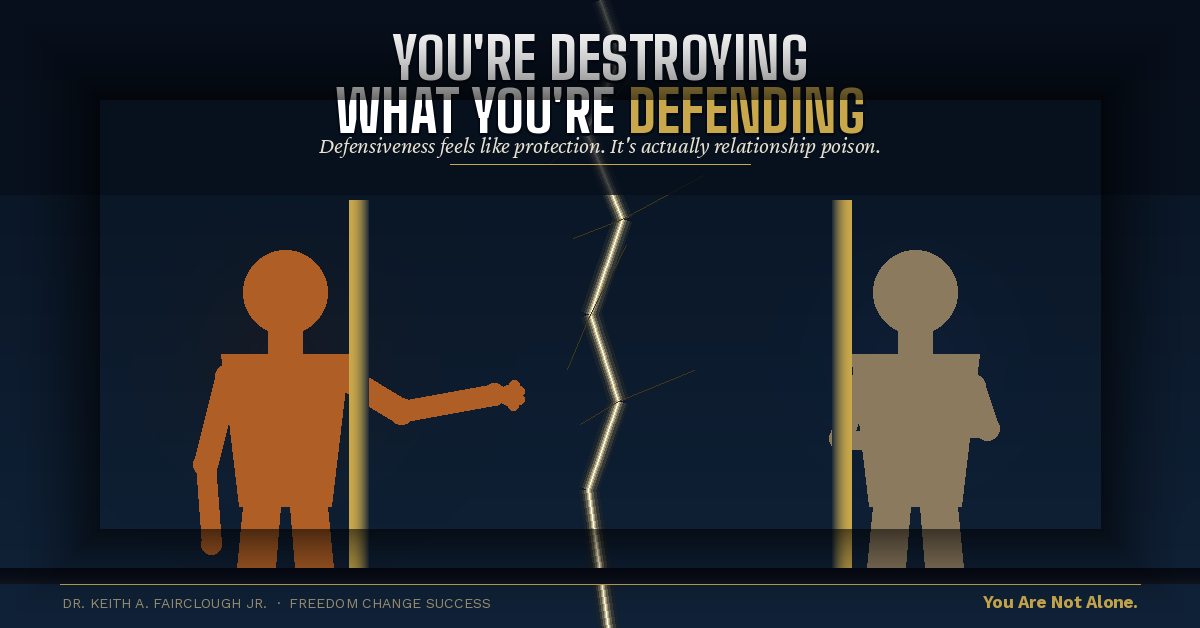
“You are destroying what you are defending.”
Say it out loud. Let it sit.
The very thing you think is keeping you safe — that need to explain yourself, to justify your actions, to protect your name — is the exact thing tearing apart every meaningful relationship in your life. Your marriage. Your children. Your friendships. Your most important connections.
And the worst part? You don’t even know it’s happening.
The Trap You Don’t Know You’re In
Here’s how it plays out. Someone in your life — your partner, your child, your friend — tries to share something with you. Maybe it involves something you did. Maybe it’s about how your behavior affected them. And the moment you hear your name connected to a problem, something inside you shifts.
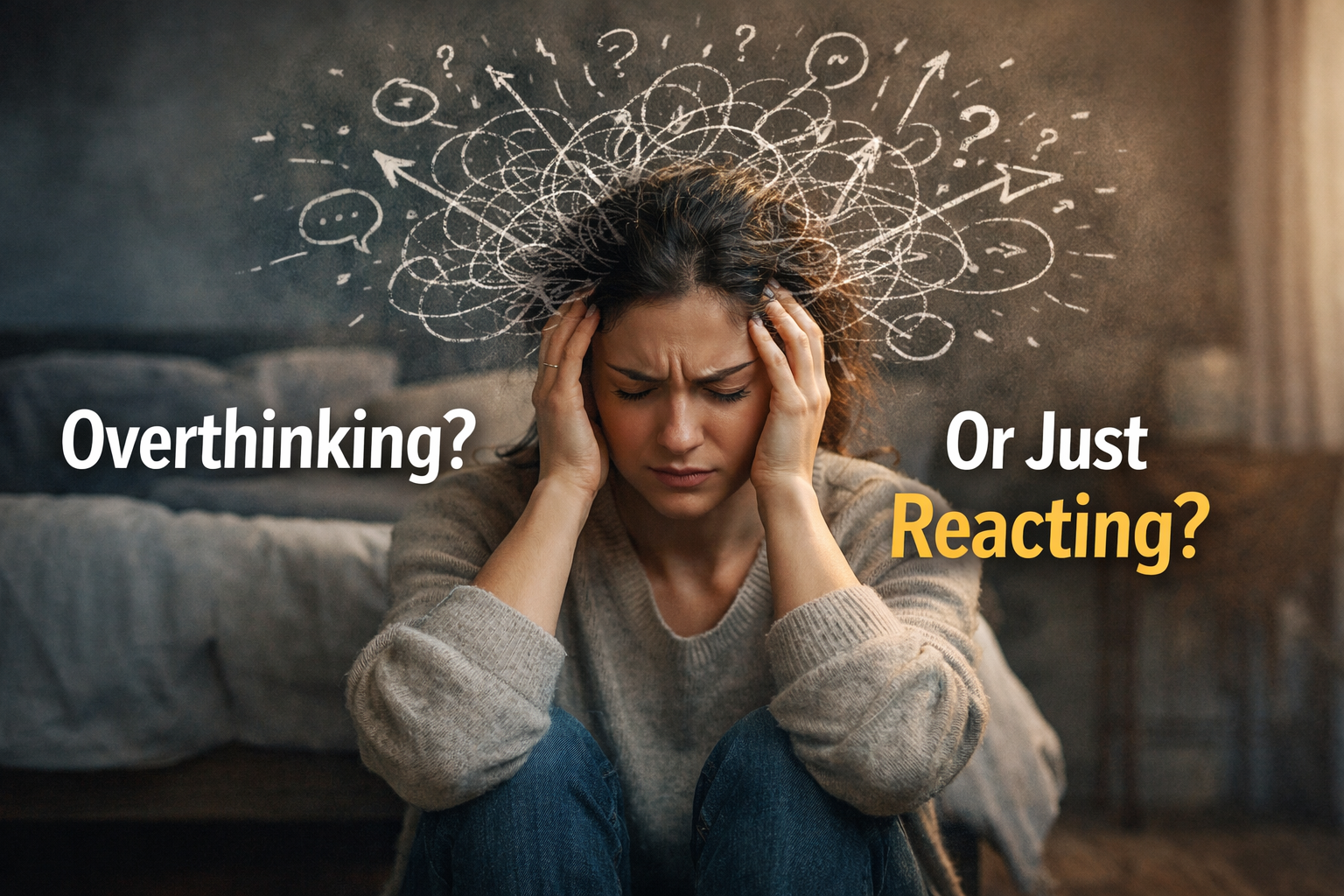
You stop listening. You start scanning.
You start cherry-picking information out of the conversation — not to understand, but to defend. Not to connect, but to protect. And maybe in the moment, you think you’re doing yourself a service. Maybe you think you’re keeping yourself safe. Maybe you think you’re protecting your good name.
But the reality of the situation is — that’s just not the case.
All you’re really doing is sending a clear message to the other person:
“I don’t care about what you think. I don’t care about what you feel. What you think and feel is not important. The only thing that’s important right now is me defending myself.”
You may not be saying those words. But that is exactly what your defensiveness is communicating.
Why This Happens
Let’s be honest about where this comes from, because it doesn’t come from nowhere.
Maybe when you were younger, you were always blamed. Always torn apart. Your name came up, and it was never good. So over time, your nervous system learned to brace for impact — and defending yourself became the only way you knew how to survive.
That made sense back then. What you did to survive made sense for that time.
But you’re not that child anymore. And the people in front of you right now are not your abusers. They are your loved ones. And they are trying to reach you.
The patterns you picked up to survive your past are now destroying your present.
Defensiveness Is Relationship Poison
This isn’t just my opinion. According to relationship researcher Dr. John Gottman, defensiveness is one of the four most destructive behaviors in any relationship — what he calls the Four Horsemen of the Apocalypse. And he’s right.
Defensiveness shuts you down. It closes you off. And it makes you completely inaccessible to any kind of meaningful connection.
Here’s what happens over time. The people in your life try to reach you. They bring something up. It becomes a fight — not because they wanted a fight, but because you weren’t willing to listen. So they try again. And again. And again. Until one day, they stop trying.
And then you’re confused.
Why won’t my kids open up to me?
Why does my wife seem so distant?
Why is my husband holding back?
Why don’t people want to connect with me?
I’ll tell you why. Because you’ve trained them.
Every time you got defensive, you taught the people around you: I’m not safe to talk to. I don’t care about what you feel. Don’t bring your real self to me.
They heard you. And they adjusted.
The Silence You’re Mistaking for Progress
This is the part that will hit you hardest, so stay with me.
You might be looking at your relationship right now and thinking: “We’re doing better. There’s not as much fighting. Things seem calm.”
I’m telling you right now — no, you’re not doing better. They just stopped bringing things up.
That’s not peace. That’s surrender. That’s someone who got tired of fighting for the right to be heard, and made a quiet decision: “If it’s going to be a fight every time, I don’t have the energy for it. I’ll keep it to myself. Or I’ll find someone else to talk to.”
And this is where it gets dangerous. Because there will always be someone else. Someone who listens. Someone who empathizes. Someone who validates. And that person — whoever they are — is going to feel like oxygen to someone who’s been suffocating. That’s how people end up in affairs. That’s how children end up in gangs. That’s how predators get access. They didn’t offer anything special. They just offered what you refused to give: the willingness to understand.
The deepest need every human being has is to be loved. And you cannot love someone you are not willing to understand.
Three Strategies to Break the Cycle
You can fix this. But you have to be willing to do something different. Here’s exactly what that looks like:
Strategy 1: Listen to Understand — Not to Respond
This is the foundation. When someone is talking to you — especially about something that involves you — your goal is not to find ammunition. Your goal is not to build your defense.
Your only job is to understand where they’re coming from.
Listen to see how their experience created their emotions. Listen to make the connection between the situation and what they felt. Stop scanning for what they got wrong. Stop preparing your rebuttal. Just listen.
Strategy 2: Take Responsibility for Your Part
This is hard. Nobody likes hearing that they hurt someone they love. But you have to own it.
If something you did affected them — even if it wasn’t your intention — own it. You don’t lose anything by doing that. What you gain is trust, closeness, and the beginning of real repair. Try saying:
“I can see how that would bother you. I can see why you’d be hurt by that. That makes sense. I apologize — that was never my intention, and I’m going to do better.”
I know many of us were taught that taking responsibility means you’re weak. That’s a lie. The truth is: owning your part is one of the most powerful things you can ever do. It tells the other person — you matter, you’re seen, what you feel is real.
Strategy 3: Change the Behavior
This is where most people fall short. They apologize. They take responsibility. And then they do the exact same thing again.
Let me be direct: if you keep making the same mistakes over and over with no real effort to change, then the apology means nothing. In fact, it does more damage — because now the other person doesn’t just feel hurt, they feel foolish for believing you.
Real change requires action. If you keep falling asleep during quality time, address it. If you’ve been absent from your kids’ lives, address it. If intimacy has disappeared from your relationship, address it. Solve the problem.
The unspoken rule in every relationship is this: if we’re going to be in this together, we both pour in. Equally. Consistently. That’s the commitment you made — even if you never said it out loud.
A Word to Parents
I need to speak to parents directly for a moment.
It is not your child’s job to form a relationship with you. It is your job — as their parent — to form a relationship with them.
You decided to bring that child into the world. You decided to raise them. That means the responsibility of building that connection falls on you — not their teachers, not the streets, not their peers. On you. So if your child isn’t opening up, don’t be confused. Don’t be offended. Ask yourself: Have I made it safe for them to come to me? Or have I trained them — through defensiveness — to stay away?
Top 3 Takeaways
#1 Defensiveness is a silent poison.
The calm you think you’re experiencing may not be peace — it may be people giving up. They didn’t stop fighting because things got better. They stopped because they got tired of not being heard.
#2 You cannot love someone you’re not willing to understand.
Paying bills, doing chores, and showing up physically — none of that replaces emotional understanding. If you’re not trying to understand, you’re not connecting. Period.
#3 Ownership + Action = Transformation.
Saying sorry isn’t enough. Taking responsibility without changing the behavior is just noise. Real change requires both words and consistent follow-through.
What To Do Today — Immediate Application
Don’t wait for the next big conversation. Start right now.
Think of one relationship in your life where defensiveness has been showing up — your partner, your child, a friend. The next time they bring something up, even something small, practice this:
• Pause before you respond. Feel the urge to defend. Acknowledge it. Don’t act on it.
• Ask yourself: “What is this person actually trying to tell me?”
• Reflect it back: “So what I’m hearing you say is ___. Is that right?”
• Own what’s yours. Even if it’s uncomfortable, find the part that belongs to you — and say so.
• Follow through. Identify one specific thing you can do differently. And do it.
One conversation. One moment of choosing understanding over self-protection. That is where transformation begins.
You Are Not Alone
If you’re reading this and realizing that defensiveness has been costing you more than you knew — I want you to know something. You’re not a bad person. You’re a person who learned to survive. And now it’s time to learn how to live. To connect. To be the kind of person the people you love can actually come to.
That is possible. I’ve seen it happen. And I want it for you.
Ready to Go Deeper? Here’s What’s Available:
• The YES SERR Couples Communication Workbook — A step-by-step guide to transforming how you speak and listen in your relationships.
• The Rebuild & Renew: The Weekly Relationship Reset Workbook — A weekly relationship reset process that keeps issues from building up, including the Clearing the Basement activity for processing old wounds.
• The Boundary Mastery Workbook — A deep dive into 9 domains of boundaries that protect you and strengthen every relationship in your life.
Reach out. Let’s do this work together. Because the relationships you want are still possible — but they require a version of you that’s willing to understand, not just defend.
Dr. Keith A. Fairclough Jr., EdD, LMHC, CPC, NCC, ACS
Founder, Freedom Change Success (FCS)
“You Are Not Alone.”